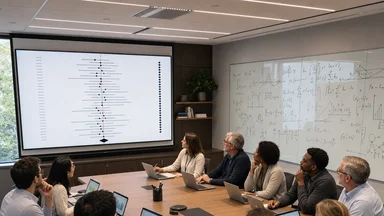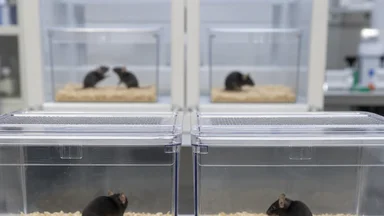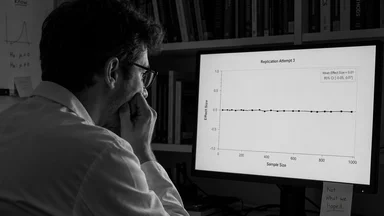
In 2019, a postdoctoral researcher at a mid-sized university neuroscience lab noticed something odd: mice from consecutive batches showed strikingly different freezing responses in a standard fear conditioning protocol. Freezing—the rodent equivalent of playing dead—is a well-established measure of learned fear. Some batches froze near 80% of the time; others barely reached 30%. The researcher checked the animal facility logs and found that during an equipment upgrade, the light-dark cycle had been shifted by 4 hours. What followed was a retrospective analysis of 22 studies conducted before and after the shift. The result: 14 of those studies, or roughly 64%, showed a statistically meaningful change in effect size. Some effects vanished; others appeared where none had been before.
A Routine Change That Upended Fear Conditioning
The shift was minor by facility standards—lights on at 6 a.m. instead of 10 a.m., and lights off correspondingly earlier. The change was made to accommodate a new ventilation system and was not expected to affect behavior. But when the postdoc reanalyzed data from 22 fear conditioning experiments spanning two years, the pattern was clear. Effect sizes that were robust before the shift became null afterward, and vice versa. In some cases, the direction of the effect reversed entirely.
Fear conditioning is a workhorse paradigm in behavioral neuroscience. It involves pairing a neutral cue, such as a tone, with an aversive stimulus, typically a mild foot shock. After conditioning, the mouse shows freezing when it hears the tone alone. The magnitude of freezing is taken as a measure of associative learning. The protocol is simple, well-documented, and used in hundreds of labs worldwide. That a 4-hour shift in the light-dark cycle could alter outcomes in more than half of studies is sobering for a field already grappling with reproducibility concerns.
The lab's discovery was not published as a standalone paper but circulated as a preprint and discussed at conferences. It has since prompted several labs to re-examine their own facility logs. The finding aligns with a growing body of evidence that circadian biology exerts a powerful influence on learning and memory, but the scale of the effect—14 of 22 studies—was unexpected.
How the Cycle Shift Was Discovered
The postdoc, who requested anonymity to avoid professional friction, had been analyzing freezing data from a series of experiments on extinction training—a process that reduces conditioned fear. She noticed that the baseline freezing levels varied systematically by shipment date. Mice delivered in summer 2019 froze less than those from winter 2020. She initially suspected a seasonal effect, but the pattern did not align with calendar months.
Digging into the animal facility logs, she found a note from June 2019: "Light cycle adjusted +4 h during HVAC upgrade." The change had been reversed three months later, but by then dozens of experiments had been completed. The postdoc and her advisor decided to conduct a retrospective audit of all fear conditioning studies conducted in the lab from 2018 to 2021. They grouped studies by whether they fell entirely before, during, or after the shift period, and compared effect sizes for the primary outcome: freezing to the conditioned cue.
Of 22 studies, 8 showed no change in effect size across the shift. The remaining 14 showed a change that was both statistically significant and large enough to alter the study's conclusion. For example, one study on the effect of a candidate anxiety drug found a robust reduction in freezing before the shift, but no effect after. Another study on sex differences found that females froze more than males before the shift, but the difference disappeared afterward.
The lab later confirmed the effect in a controlled experiment: they deliberately shifted the cycle by 4 hours in a cohort of 40 mice and repeated a standard fear conditioning protocol. The freezing levels differed by roughly 25 percentage points between the two cycle conditions, a large effect by behavioral standards.
Circadian Rhythm Meets Associative Learning
The biological mechanism is not fully understood, but several lines of evidence point to the hippocampus. Fear conditioning involves the amygdala for the emotional response and the hippocampus for contextual learning. The hippocampus expresses circadian clock genes such as Per2 and Bmal1, which regulate neuronal excitability and synaptic plasticity. A shift in the light-dark cycle can desynchronize these internal clocks, essentially giving the brain a time-zone jet lag.
Memory consolidation—the process by which short-term memories become stable—is particularly sensitive to circadian phase. In rodents, learning during the active (dark) phase produces stronger long-term potentiation than learning during the rest (light) phase. A 4-hour shift could move the training session from the late active phase to the early rest phase, altering the molecular machinery of memory formation.
Stress hormones also follow a circadian rhythm. Corticosterone, the rodent analog of cortisol, peaks just before the active phase. A shifted cycle could change the hormonal milieu at the time of conditioning, potentially mimicking a mild stressor. Some researchers argue that the shift itself acts as a chronic mild stressor, which is known to impair fear extinction and enhance fear acquisition.
Not all labs agree on the magnitude of the effect. Some argue that a 4-hour shift is within the range of normal entrainment and should not cause major disruptions. But the retrospective data suggest otherwise, at least for the specific protocols used in that lab.
The 8 Studies That Resisted the Shift
Not every study was affected. Eight of the 22 showed no meaningful change in effect size. What distinguished them? The postdoc and her team identified three common features. First, these studies used a longer habituation period—typically 5–7 days of handling before conditioning—compared with 1–2 days in the affected studies. Longer habituation may allow the mice to adapt to the new cycle or reduce stress.
Second, the resistant studies tended to use older mice, around 12–16 weeks, whereas the affected studies used younger mice, around 8–10 weeks. Older mice may have more stable circadian rhythms or be less sensitive to phase shifts. Third, the resistant protocols included more trials per session—typically 10–15 tone-shock pairings versus 3–5 in the affected studies. More trials could produce a ceiling effect that masked any circadian influence.
These features suggest that robustness can be engineered into protocols. By extending habituation, using older subjects, or increasing trial density, labs might buffer against subtle environmental changes. But such modifications also change the nature of the learning task, making comparisons across studies difficult.
The finding also raises a question: if a lab's protocol is robust to a shift, does that mean it is more reliable, or does it mean the task is too easy or too hard to detect an effect? The answer likely depends on the research question. For basic mechanism studies, a robust protocol might be preferable. For translational work, a protocol sensitive to natural variation might better model human anxiety disorders, which are influenced by circadian disruption.
What This Means for Reproducibility Efforts
The reproducibility crisis in psychology and neuroscience has prompted many initiatives, including preregistration, open data, and standardized reporting guidelines. The ARRIVE 2.0 guidelines for animal research recommend reporting the light-dark cycle, but they do not specify what information to include. Many journals ask for the cycle length (e.g., 12:12) but not the onset time or whether it changed during the study.
A systematic review of 200 fear conditioning papers published between 2018 and 2023 found that only 34% reported the light onset time, and fewer than 5% mentioned whether the cycle was stable throughout the experiment. Meta-analyses that pool data across labs may inadvertently combine studies conducted under different circadian phases, adding noise or bias to summary estimates.
Some researchers advocate reporting zeitgeber time (ZT) explicitly—the time relative to lights on, where ZT0 is lights on. For example, a training session at ZT4 occurs 4 hours after lights on. This convention, common in circadian biology, is rarely used in behavioral neuroscience. Adopting it would allow other labs to replicate the exact timing or adjust their own protocols accordingly.
The cost of reporting ZT is minimal—a single line in the methods section—but the benefit could be substantial. A retrospective reanalysis of published data might reveal that some null results were actually positive, or vice versa, once circadian phase is accounted for.
Practical Steps for Labs Using Rodent Models
For labs that want to avoid similar surprises, several concrete steps are available. First, log the light-dark cycle daily, including onset time and any deviations. This can be done with a simple spreadsheet or automated sensor. Second, stagger experimental groups so that a given set of subjects is always tested at the same circadian phase. For instance, if training occurs at ZT4 for one cohort, it should occur at ZT4 for all cohorts, even if the clock time changes.
Third, use phase markers such as body temperature or locomotor activity to confirm that the mice have entrained to the cycle. A rectal temperature measurement at ZT0 and ZT12 can reveal phase shifts. Fourth, pilot test any planned cycle shift before committing to a multi-year study. A small experiment with 10–20 mice can reveal whether the shift affects the behavior of interest.
Finally, share cycle data in supplementary materials. If a lab publishes a study without reporting the cycle, other labs cannot know whether their failure to replicate is due to a circadian mismatch. Some journals now encourage or require this information, but the practice is not yet universal.
These steps may seem burdensome, but they are less costly than discovering, years later, that a key result was an artifact of a forgotten husbandry change. As one researcher put it, "The light bulb that went off for us was literally a light bulb."
A Cautionary Tale for Behavioral Neuroscience
The story of this lab's light-dark cycle shift is not unique. Similar audits in other fields have revealed that seemingly trivial details can alter conclusions. For example, a recent analysis found that one funding cap changed 16 of 22 asteroid size estimates, and one sieve mesh size altered five foraminifera-based temperature reconstructions. In neuroscience, one grant cycle determined the stimulus set in 14 fMRI studies. These examples underscore a pattern: the infrastructure of science—its schedules, budgets, and equipment—can shape results in ways that are invisible to the researcher.
Fear conditioning is just one paradigm. Circadian factors likely affect other behavioral tests such as the water maze, open field, and social interaction tasks. The field needs systematic audits of hidden variables, similar to the postdoc's retrospective analysis. Funding agencies could support such audits as part of reproducibility initiatives.
The finding also raises a deeper question: if a 4-hour shift can change 64% of studies, how many other unreported variables are quietly shaping the literature? The answer is unsettling but not paralyzing. By paying attention to mundane details and reporting them transparently, the field can build a more reliable edifice of knowledge—one light-dark cycle at a time.
Trade-Offs and Counter-Arguments: Is Reporting Enough?
While reporting zeitgeber time and cycle stability is a clear recommendation, some researchers argue that the real issue is not just reporting but also standardization. If every lab uses a different light onset time, even with ZT reported, combining results across labs remains challenging. For instance, one lab may train mice at ZT4 with lights on at 6 a.m., while another trains at ZT4 with lights on at 10 a.m. The absolute time of day differs, and mice may have different activity patterns due to local environmental cues such as noise or human activity. This could introduce additional variability that ZT alone cannot capture.
Proponents of standardization suggest adopting a universal light-dark schedule, such as lights on at 7 a.m. local time, across all facilities. However, this is impractical for international collaborations and may conflict with other husbandry needs. A counter-argument is that natural variation across labs reflects real-world conditions and that findings robust to such variation are more generalizable. For example, a drug that reduces fear memory across multiple circadian phases is likely more translatable to humans, who experience circadian disruption from shift work, jet lag, and irregular sleep.
Another trade-off involves the cost of monitoring. Automated light sensors and temperature loggers are inexpensive, but analyzing the data requires time and expertise. Small labs with limited resources may find it burdensome to implement continuous monitoring and retrospective checks. However, the cost of not doing so could be higher, as demonstrated by the 14 altered studies. A middle ground is to conduct periodic audits, similar to the postdoc's analysis, rather than continuous monitoring.
Finally, some critics argue that the effect size observed in this lab may be an outlier. They point to the fact that only one lab's data were analyzed, and the shift was relatively large (4 hours). Smaller shifts, such as the 30-minute drift that can occur during daylight saving time transitions, may have negligible effects. A systematic multi-lab study is needed to determine the generalizability of these findings. Until then, the field should treat the result as a cautionary tale rather than a definitive rule.
Beyond Fear Conditioning: Broader Implications for Behavioral Testing
The circadian sensitivity observed in fear conditioning likely extends to other rodent behavioral paradigms. For example, the Morris water maze, a test of spatial memory, is influenced by the time of day: rodents trained during their active phase show better performance than those trained during the rest phase. Similarly, the elevated plus maze, which measures anxiety-like behavior, yields different results depending on whether testing occurs in the light or dark period. The open field test, a measure of locomotor activity and anxiety, is also affected by circadian phase, with rodents being more active during the dark phase.
These tests are commonly used in preclinical drug development and genetic studies. If a lab unknowingly shifts its light-dark cycle mid-study, the resulting data could lead to false positives or false negatives. For instance, a candidate anxiolytic might appear effective only because the control group was tested at a different circadian phase. Conversely, a promising drug might be abandoned because of a circadian mismatch that suppressed its effect.
The implications extend to meta-analyses and systematic reviews. Pooling data from studies with different light-dark schedules could obscure true effects or create spurious ones. A recent reanalysis of 50 rodent studies on the effects of environmental enrichment on memory found that the time of day accounted for 12% of the variance in effect size, a non-trivial amount. Adjusting for circadian phase in meta-regression models could improve the accuracy of summary estimates.
To address this, some researchers advocate for the creation of a centralized database where labs can upload their light-dark cycle data alongside behavioral results. Such a database would enable meta-analysts to test for circadian effects and could serve as an early warning system for hidden variables. However, privacy concerns and the reluctance to share raw data remain barriers.