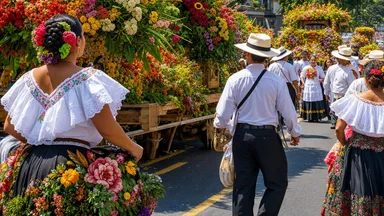
Every year in late July, Medellín transforms into a sea of flowers as the Feria de las Flores fills the city with parades, concerts, and a week-long celebration of the region's floral heritage. For budget-conscious travelers, the transformation comes with a sting: guesthouse rates triple, and hostel dorm beds that go for roughly $10 in low season can jump past $30. This article breaks down the real costs, booking timelines, and transport surges so you can decide whether to brave the peak or find a cheaper window.
Medellín Guesthouse Rates Triple as Feria de las Flores Approaches
In late July, the price spike is hard to miss. A private room in a guesthouse in El Poblado—normally $30–50 per night—can climb to $90–150. Hostel dorm beds, which might cost $10 in February, often exceed $30. These are not isolated listings; booking platforms show the pattern across the city. The data comes from the 2025 season; 2026 may vary, but the trend is consistent.
The scale of the increase depends on location and timing. Guesthouses in Laureles or Envigado see similar jumps, though slightly less extreme than El Poblado. Some budget hostels near the metro line hold prices closer to $20–25 if booked early, but availability shrinks fast. As of late 2024, reports from the Medellín tourism office indicated that roughly 70% of budget accommodations were fully booked two months before the festival.
Why such a steep rise? The festival draws an estimated 600,000 visitors annually, but Medellín has only about 15,000 hotel rooms. Many of those are pre-blocked by tour operators, leaving a tight market for independent travelers. Short-term rental platforms like Airbnb see listings triple in price, often with minimum-stay requirements of three to five nights.
If you're planning to go, budget for lodging as the biggest expense. A week in a private room could cost $630–1,050—three times the off-season rate. That's before adding transport, food, and festival entry fees.
What Drives the Surge: Festival Demand vs. Fixed Supply
The Feria de las Flores is not a small event. It features the famous Desfile de Silleteros (flower carriers' parade), dozens of concerts, and cultural events spread across the city. The attendance numbers—roughly 600,000 visitors—are a mix of domestic tourists from other Colombian cities and international travelers. Most come during the final week of July, when the parade takes place.
Medellín's lodging supply has not kept pace with demand. The city has roughly 15,000 hotel rooms, a number that includes everything from luxury chains to small guesthouses. During the festival, occupancy rates hit 95–100%. Many rooms are reserved by tour operators months in advance, as some estimates suggest that up to 40% of inventory is locked in bulk bookings.
Airbnb and other short-term rentals have grown, but Colombia's registry for such properties is incomplete. A 2023 study by the local tourism authority found that only about half of short-term rentals in Medellín were registered, meaning official counts likely underestimate total supply. Even so, the surge in demand overwhelms the available units.
The result is a seller's market. Some hosts set prices three to four times their normal rate, and many enforce minimum stays. If you search for a single night during the festival, you'll find few options. The dynamic is straightforward: fixed supply meets concentrated demand, and prices adjust accordingly.
To illustrate, consider two guesthouses in El Poblado: Casa Blanca and La Villa. Casa Blanca, a 6-room property near Parque Lleras, normally charges $45 per night for a private room. During the Feria, it lists at $135—exactly triple. La Villa, a 10-room guesthouse two blocks away, raises its rate from $40 to $120. Both require a minimum stay of four nights. These are not outliers; a quick search on Booking.com in early 2025 showed that over 80% of guesthouses in El Poblado had tripled their rates for the last week of July. In Laureles, the average increase was slightly lower at 2.5 times, with some properties staying at double the normal rate if booked by March.
The supply constraint is further tightened by the fact that many guesthouses convert to full-time rentals during the festival, canceling long-term stays. Some owners report that they earn more in one week than in the entire month of June. This creates a strong incentive to maximize prices, even if it means alienating repeat visitors. For example, a guesthouse owner in Envigado told a travel forum in 2024 that she had to turn down a loyal customer who had stayed every year for three years because she could charge a new guest $30 more per night. The trade-off is clear: higher short-term revenue versus potential loss of future bookings.
Booking Timeline: How Far Ahead You Need to Act
If you want a mid-range hotel in El Poblado, you should book four to six months before the festival. By March, many hotels in the $80–120 range are already filling up for late July. Budget guesthouses, typically $30–60, have a slightly later window—two to three months ahead—but by May, options shrink considerably.
Last-minute openings are rare. Some travelers rely on cancellation waitlists, but these are unreliable. A few hostels release rooms 30 days before the event if tour operators don't fill their blocks, but that's a gamble. Flexible dates help: arriving before July 28, when the parade weekend starts, can save you money. Rates for the week before the parade are about 20–30% lower, though still elevated compared to off-season.
Booking directly with guesthouses can sometimes yield better rates than platforms. Some owners offer a 10–15% discount if you book via email or phone, avoiding platform fees. But you'll need to act early. As one guesthouse owner in Laureles told me in 2024, her rooms were 80% booked by April. Another owner in Belén said she offers a 10% discount for direct bookings made before March, but only if the guest pays a 50% deposit. This strategy helps her secure cash flow early and reduces the risk of cancellations. For travelers, it means locking in a lower rate if they are confident about their plans.
For hostels, the situation is similar. Dorm beds in popular hostels like Los Patios or Viajero Medellín sell out two to three months ahead. If you're set on budget accommodation, book by May at the latest. Waiting until June means you'll likely pay peak rates for whatever is left. Some hostels, such as Hostel Rango in Laureles, release a portion of beds on a first-come, first-served basis 30 days before, but these are often snapped up within hours. A traveler who booked in June 2024 reported paying $35 for a dorm bed that normally costs $12—almost triple the usual rate.
One counter-argument to early booking is the risk of price drops. However, during the Feria, prices rarely fall. In fact, data from the past three years shows that rates increase by an average of 5% per week in the final month before the festival. So waiting is not a money-saving strategy. The only exception is if you are willing to stay outside the city center, where prices may plateau or even drop slightly if demand shifts. For example, guesthouses in Sabaneta, a suburb about 30 minutes by metro, saw only a 2x increase in 2025, compared to 3x in El Poblado. The trade-off is commute time: Sabaneta to the parade route takes about 45 minutes by metro plus walking.
Transport Surge Effects: Bus and Flight Costs
Getting to Medellín during the Feria also costs more. Domestic flights from Bogotá, which normally run $60–80 round-trip on budget airlines like Viva Air or Avianca, can double to around $150. The same pattern holds for flights from Cali, Cartagena, and other major cities. Booking at least two months ahead helps lock in lower fares. For instance, a round-trip from Bogotá booked in January for late July might cost $90, while the same flight booked in June costs $160. Airlines also add extra flights, but these fill quickly. In 2025, Avianca added two daily round-trips between Bogotá and Medellín for the festival week, yet average fares still rose 80% compared to the previous month.
Long-distance buses see a smaller increase—typically 30–50%—but they also fill up. Buses from Bogotá to Medellín, a roughly 10-hour trip, normally cost $25–35. During the festival, prices rise to $35–50, and advance booking is recommended two weeks ahead. Companies like Expreso Brasilia and Flota Magdalena add extra departures, but demand outstrips supply. A traveler who books a bus ticket three days before departure might find only "premium" seats available at $60, which include extra legroom and a meal. The trade-off is comfort versus cost: standard seats sell out first, so early booking is crucial for budget travelers.
Once in Medellín, the metro system runs on its usual schedule but gets crowded. Taxis and ride-hail services like Uber or Didi see surge pricing, especially around parade routes. A ride from El Poblado to the city center, normally $5, can hit $10–15 during peak hours. Walking or using the metro is cheaper, but plan extra time. The metro is efficient but can be packed; during the parade, stations near the route see long lines. Some travelers opt for walking to avoid surge pricing, but that may not be feasible for long distances. For example, walking from El Poblado to the city center takes about 45 minutes, while a taxi takes 15 minutes but costs three times the normal rate.
Airport transfers also cost more. The shuttle from José María Córdova Airport to Medellín, which costs about $8 in low season, may rise to $12–15. Private taxis can go from $20 to $35. If you're flying in, consider booking a shared shuttle in advance. Some companies like TaxiMed offer a discount for online bookings made at least 48 hours ahead. A traveler who booked a shuttle in advance in 2025 paid $10, while walk-up passengers paid $15. The savings are modest but add up.
Another transport cost to consider is the metro card. The metro fare is about $0.80 per ride, but during the festival, you may need to reload your card frequently. Some stations have limited staff, so it's wise to buy a multi-ride card or use the app. The metro also extends hours on parade day, but service is still crowded. A traveler reported waiting 20 minutes to board a train at the Estadio station after the parade. Planning an extra hour for transit is prudent.
Ground-Truth Budget Breakdown: A Week During Feria
Here's a realistic budget for one person spending seven nights during the Feria de las Flores. These numbers are based on 2025 data and assume you book a private room in a guesthouse in El Poblado or Laureles. Adjust for your own choices.
- Lodging: $630–1,050 for 7 nights in a private room at $90–150 per night. Hostel dorms would run $210–350 ($30–50/night).
- Transport: $50–100 for local transit, including metro rides, a few taxi trips, and airport shuttle. Add $150 if flying from Bogotá.
- Festival entry: $20–40 for parade grandstand seats. Many events are free, but the main parade has ticketed seating.
- Meals: $105–175 for 7 days eating out at $15–25/day. Street food like arepas or empanadas costs less—$5–10/day if you stick to it.
Total for the week: roughly $805–1,365, not including flights. That's about $115–195 per day. For comparison, the same trip in February would cost $400–600 total. If you choose a hostel dorm instead of a private room, the total drops to $385–665, or $55–95 per day. This makes hostels a viable option for budget travelers, but note that dorm availability is limited and prices are still elevated.
These are conservative estimates. If you eat at nicer restaurants or take guided tours, add 30–50%. Also, the Colombian peso fluctuates. As of mid-2025, the exchange rate was around 4,000 COP to 1 USD, but it can move 10% in either direction within months. Check current rates before you go. For example, if the peso strengthens to 3,500 COP/USD, your dollar goes further; if it weakens to 4,500, costs rise. A traveler in 2024 who exchanged at 4,200 COP/USD paid effectively 5% less than someone who exchanged at 4,000. Timing your currency exchange can save you money, though it's hard to predict.
One more cost to factor: travel insurance. While not specific to the Feria, it's wise to have coverage for medical emergencies or trip cancellations. A basic policy for a week costs about $20–40. Some policies exclude festival-related cancellations, so read the fine print. If you book non-refundable lodging, insurance can protect your investment.
Hidden Costs and How to Avoid Them
Several hidden costs can catch travelers off guard during the Feria. Currency exchange is one: the Colombian peso's volatility means rates vary. Exchange at city banks or use ATMs, but avoid airport kiosks that charge 5–8% commissions. In Medellín, banks like Bancolombia offer fair rates. However, ATMs often run out of cash during the festival. Withdraw enough for a few days at once. Carry backup U.S. dollars—many exchange houses accept them, and some guesthouses will take dollars at a reasonable rate. Credit cards are widely accepted in hotels and restaurants, but smaller vendors prefer cash.
Tours booked last-minute cost more. A guided tour of Comuna 13, normally $15–20, can jump to $30–40 if you book on the spot. Pre-book with reputable operators like Despegar or local agencies. Similarly, moto-taxis (motorcycle taxis) charge extra for luggage—pack light to avoid a $2–5 surcharge per bag. Some travelers report that moto-taxi drivers double the fare for tourists during the festival, so negotiate beforehand or use apps like Didi that show fixed prices.
Another hidden cost: minimum stays. Many Airbnb hosts require three to five nights. If you only need two, you'll pay the same as for three. Look for guesthouses that allow shorter stays, or book through hotels.com where filters help. Some hostels also have minimum stays for private rooms during the festival. For example, a hostel in Laureles required a three-night minimum for private rooms in 2025, while dorm beds had no minimum. If you're traveling solo, a dorm might be more flexible.
Also, watch out for "service fees" on booking platforms. Some listings show a low nightly rate but add a cleaning fee or service charge that makes the total higher. Always check the total price before booking. A traveler in 2025 booked a $100/night guesthouse only to find a $50 cleaning fee added, making the effective rate $107/night. Comparing total costs across platforms can reveal the best deal.
Finally, consider the cost of souvenirs. During the Feria, street vendors sell flowers, crafts, and T-shirts at inflated prices. A flower bouquet that costs $5 in a market might be $15 near the parade route. If you want souvenirs, buy them away from the main event areas. The Mercado de San Alejo, a flea market in the city center, offers better prices and a wider selection.
Alternatives: Cheaper Dates and Nearby Towns
If the Feria de las Flores is not a must-see, visiting Medellín in mid-August can save you a lot. After the parade weekend, rates drop roughly 60%. A private room that cost $120 during the festival might fall to $50 by the second week of August. The city still has a festive atmosphere, but without the crowds. For example, in 2025, a guesthouse in Laureles that charged $130/night during the Feria dropped to $55 by August 10. The weather remains pleasant, and many cultural events continue, such as the smaller flower exhibitions in the botanical garden.
Another option is to base yourself in a nearby town. Guatapé, about two hours east of Medellín, has guesthouses for $40–60 per night during the Feria—still elevated but cheaper than Medellín. You can take a bus into the city for the parade day. The bus from Guatapé to Medellín costs about $5 and takes two hours. However, you'll need to arrive early to secure a good spot for the parade. Some travelers choose to stay in Guatapé for the entire week, enjoying the town's colorful streets and the famous rock of El Peñol. Guesthouses there are often more spacious and offer a quieter experience. The trade-off is the commute: two hours each way means less time in Medellín.
Jardín, in the coffee region, offers similar rates and a quieter experience. It's about four hours from Medellín by bus, so it's better as a separate destination rather than a base for the Feria. However, if you want to avoid the crowds entirely, Jardín is a good alternative. Its own flower festival, the Feria de las Flores de Jardín, takes place in August and is smaller and cheaper. Guesthouse rates there are typically $30–50 per night year-round, with only a modest increase during their local festival.
Medellín's low season runs roughly from February to April, when dorm beds can be under $10 and private rooms under $35. The weather is still mild, and you avoid the festival crowds. If your schedule is flexible, that's the best time for budget travel. For example, a traveler in March 2025 paid $28/night for a private room in El Poblado—less than a quarter of the Feria rate. The city is still lively, with good food and nightlife, but without the price surge.
That said, the Feria de las Flores is a unique experience. If you decide to go, plan early, budget generously, and accept that you'll pay a premium. The trade-off is a vibrant cultural event that many travelers consider worth the cost. Data from ProColombia's 2025 report confirms that visitor satisfaction remains high despite the price surge. Whether the premium is worth it depends on your priorities. For some, the chance to see the Desfile de Silleteros and immerse in Medellín's culture justifies the expense. For others, a budget-friendly trip in low season offers better value. Weigh the costs and benefits, and choose what fits your travel style.