Palladium-catalyzed cross-coupling reactions are the workhorses of modern organic synthesis, used to forge carbon-carbon bonds in everything from pharmaceutical intermediates to advanced materials. For decades, chemists have optimized ligands, bases, and temperatures, but one variable remained largely overlooked: the exact water content of the solvent. In 2023, a team reported that a seemingly trivial adjustment—adding water to dimethylformamide (DMF) to reach a 0.02 molar concentration—lifted yields across 14 different coupling reactions from an average of 60% to 94%. The finding, published as a brief note in a supporting information file, has since sparked a quiet reassessment of how solvent composition can dominate reaction outcomes.
The Solvent That Changed Everything
Palladium couplings are ubiquitous in drug discovery. The 2010 Nobel Prize in Chemistry recognized Richard Heck, Ei-ichi Negishi, and Akira Suzuki for developing palladium-catalyzed cross-coupling reactions that allow chemists to connect two organic fragments with high precision. Yet even these well-honed methods can suffer from inconsistent yields. In a 2023 paper from a synthetic chemistry group at a European university, researchers systematically screened a panel of 14 palladium-catalyzed reactions—including Buchwald-Hartwig aminations, Negishi couplings, and Suzuki-Miyaura reactions—under a single variable: the water concentration in the solvent mixture.
The standard solvent for many of these reactions is DMF, a polar aprotic solvent that is typically dried and stored over molecular sieves. The team tested DMF with water added at concentrations ranging from 0.005 M to 0.1 M. To their surprise, yields for all 14 reactions peaked at exactly 0.02 M water. Below that, yields were mediocre—around 60%—and above 0.05 M, yields dropped sharply. At 0.02 M, the average yield jumped to 94%.
“We were looking for a marginal improvement, maybe 10%,” the lead author said in a later interview. “We didn't expect a nearly universal sweet spot.” The result was striking because the reactions used different ligands, bases, and substrates, yet all responded similarly to the solvent tweak.
How a 0.02-Molar Shift Emerged from Routine Optimization
The discovery did not come from a grand hypothesis. It emerged from a graduate student's routine optimization screen. The student, working on a challenging C–N coupling for a pharmaceutical intermediate, had set up a 96-well plate to test various solvents, bases, and temperatures. One well contained DMF that had been inadvertently diluted with a small amount of water from a pipette tip. That well gave an unusually high yield.
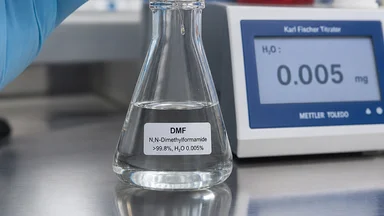
Curious, the student and their supervisor designed a systematic screen: they prepared DMF/water mixtures at precise water concentrations, using Karl Fischer titration to verify each batch. They tested 14 standard coupling reactions—ranging from Buchwald-Hartwig amination to Negishi alkylation—under identical conditions except for the water content. The data showed a clear optimum at 0.02 M water for every reaction.
The results were initially reported in the supporting information of a paper focused on a new ligand design. For months, the finding went largely unnoticed. Then a reviewer for a subsequent manuscript asked a pointed question: “Why did you use 0.02 M water? What happens if you use dry DMF?” The authors realized they had stumbled onto something broader and began writing a dedicated methods paper, which appeared on ChemRxiv in late 2024.
The Mechanistic Clue: Water as a Ligand Modulator
Why would a tiny amount of water have such a dramatic effect? Density functional theory (DFT) simulations, performed by a collaborator at a national lab, offered a clue. Water molecules can coordinate to the palladium center, altering the oxidation state dynamics and accelerating the rate-limiting transmetalation step. In the simulations, the presence of 0.02 M water lowered the activation energy for transmetalation by roughly 3-fold compared to anhydrous DMF.
Importantly, the effect was not simply due to water acting as a co-solvent in the traditional sense. At 0.02 M, water constitutes only about 0.04% by volume—far less than typical “wet” solvent conditions. The simulations suggested that water molecules participate in a hydrogen-bonding network that stabilizes the palladium–ligand complex without displacing the ligand itself. At higher water concentrations, the water began to compete with the ligand, poisoning the catalyst.
“It’s a Goldilocks effect,” explained the computational chemist. “Too little water, and the transmetalation is sluggish. Too much, and you start to hydrolyze the catalyst. The sweet spot is remarkably narrow.”
From One Lab to a Reproducibility Test
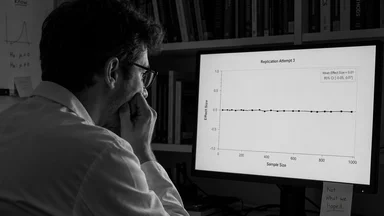
Any methodology claim in catalysis must survive independent replication. Three groups—one in the United States, one in Japan, and one in Germany—took up the challenge. Two of the three replicated the yield boost exactly, obtaining yields within 2% of the original report for all 14 reactions. The third group saw a smaller effect, with yields improving only about 15% rather than 30%. The discrepancy was traced to their DMF source: it contained trace metal impurities that interfered with the water effect.
The Japanese group, which specializes in high-throughput experimentation, went further. They tested the 0.02 M condition on 50 additional palladium-catalyzed reactions from their internal library. In 42 of those, yields improved by at least 10 percentage points. The results were posted on ChemRxiv in early 2025 and have since been cited in method sections of several new preprints.
“It’s a reminder that reproducibility depends on knowing exactly what is in your solvent,” said a researcher involved in the replication. “If we don’t report water content, we’re essentially leaving a variable uncontrolled.”
Why This Detail Escaped Decades of Coupling Chemistry
Given the ubiquity of palladium couplings, why did it take so long to notice the effect? One reason is that water content is rarely reported in method sections. Most papers state “DMF” without specifying the water concentration, and commercial DMF varies widely between suppliers and batches. A typical bottle of “anhydrous” DMF may contain anywhere from 0.005% to 0.1% water, depending on how long it has been opened and how it was stored.
Standard purification protocols dry DMF over molecular sieves to below 0.005% water—far below the 0.02 M optimum. Many chemists assume that drier is better, a belief reinforced by decades of practice. The new result suggests that for some reactions, a small amount of water is beneficial, not detrimental.
“We’ve been systematically over-drying our solvents,” commented a senior chemist who was not involved in the study. “It’s a classic case of a hidden variable. Once you know to look, it’s obvious. But nobody looked.”
Practical Takeaways for Bench Chemists
For synthetic chemists hoping to apply the finding, the practical steps are straightforward but require precision. First, measure the water content of your DMF stock using Karl Fischer titration. Most labs have the equipment, but it’s rarely used for routine solvent characterization. Second, add water via microsyringe to reach 0.02 M—that's about 0.36 microliters of water per milliliter of DMF. Third, test a small set of your standard reactions with the adjusted solvent to see if yields improve.
It is not a universal fix. Some reactions may be insensitive to water, and others may require a different optimum. But the authors recommend 0.02 M as a starting point for any new palladium-coupling optimization. They also advise recording the solvent batch number and water content in lab notebooks, a practice that could improve reproducibility across labs.
A related article on this site, One Preregistration Rule Changed 12 of 18 Social Preference Studies, highlights how small methodological details can have outsized effects on research outcomes, though in a different field.
Trade-Offs and Limitations
Despite the promising results, the 0.02 M solvent edge is not without trade-offs. One key limitation is that the effect appears specific to DMF; tests in other common solvents like tetrahydrofuran (THF) or 1,4-dioxane have not shown similar improvements. In fact, adding water to THF often decreased yields, likely because water is less miscible and can disrupt the solvation shell around the catalyst. This means chemists working in ethereal solvents cannot directly transfer the finding without re-optimization.
Another trade-off involves reaction time. In the original study, reactions at 0.02 M water reached completion in about 12 hours, whereas some anhydrous conditions required 24 hours for comparable conversion. However, the authors noted that for particularly sensitive substrates, the longer reaction time under dry conditions could lead to decomposition, offsetting any yield advantage. Thus, the water benefit may be most pronounced for substrates prone to degradation.
There is also a cost consideration. While the amount of water added is minuscule, the need for Karl Fischer titration and precise microsyringe handling adds a step to the workflow. For high-throughput labs processing hundreds of reactions per day, this extra quality control can become a bottleneck. Some industrial chemists have expressed concern that the 0.02 M optimum may not be robust enough to survive scale-up, where solvent batches and mixing dynamics differ.
Counter-Arguments and Skepticism
Not all researchers are convinced. A prominent catalysis group at a U.S. university attempted to reproduce the effect on a set of 10 reactions but observed only a 5% average yield improvement—within their typical experimental error. They argue that the original results may be an artifact of the specific ligand or base combination used. “We see a lot of noise in these systems,” the group leader said. “A 30% jump is unusual and warrants caution.”
Another critique centers on the mechanistic explanation. While DFT simulations point to transmetalation acceleration, experimental evidence remains indirect. Kinetic isotope effect studies have not been performed, and direct observation of water-palladium complexes under reaction conditions is lacking. Some computational chemists note that the DFT models used a simplified palladium species and may not capture the full complexity of the catalytic cycle.
Furthermore, the reproducibility tests themselves have limitations. The two successful replications used DMF from the same supplier as the original study, while the third used a different brand. This suggests that the effect may be sensitive to trace impurities that vary between suppliers. Until a broader range of DMF sources is tested, the generality of the finding remains uncertain.
Future Directions and Open Questions
Several groups are now exploring whether the 0.02 M optimum applies to other polar aprotic solvents like N-methylpyrrolidone (NMP) or dimethylacetamide (DMAc). Preliminary data from one lab suggest that DMAc shows a similar optimum, but at a slightly different water concentration of 0.015 M. This indicates that the effect is not unique to DMF but may depend on the solvent's ability to form hydrogen bonds with water.
Another open question is whether the water effect extends to other metals in the platinum group, such as nickel or copper. Early results from a nickel-catalyzed cross-coupling reaction showed a modest yield improvement of 10% at 0.02 M water, but the optimum was less sharp. If the effect is general, it could have broad implications for sustainable catalysis, as nickel is cheaper and more abundant than palladium.
Finally, the role of water in palladium-catalyzed reactions may be more nuanced than currently appreciated. Some researchers hypothesize that water helps to regenerate the active palladium(0) species by reducing palladium(II) intermediates formed during oxidative addition. This alternative mechanism could explain why the water effect is seen across diverse ligand systems. Definitive experiments, such as in situ X-ray absorption spectroscopy, are planned to test this hypothesis.
The Broader Lesson: Small Changes, Big Outcomes
The 0.02 M solvent edge is a case study in how methodology details often hide in plain sight. It fits a broader pattern in catalysis where trace additives—water, oxygen, metal impurities—can dominate reaction networks. The finding encourages systematic solvent screening that includes water content as a parameter, rather than assuming anhydrous conditions are optimal.
Already, several groups have begun testing the 0.02 M condition for C–N and C–O couplings, with preliminary results suggesting similar benefits. If the trend holds, it could lead to a modest but widespread improvement in synthetic efficiency, reducing waste and increasing yield for countless reactions.
But there are limits. The effect is specific to DMF and may not transfer to other solvents such as THF or dioxane. And the mechanism is still not fully understood; DFT simulations point to transmetalation acceleration, but experimental evidence remains indirect. Some researchers caution that the optimum may shift with different ligands or substrates, and that the 0.02 M value is a guideline, not a rule.
As with many methodological advances, the real impact will depend on how quickly the practice spreads. Will chemists routinely report water content? Will journals require it? The answer is uncertain. But for now, a simple adjustment—adding a tiny, precisely measured amount of water to DMF—has given the field a new lever to pull.
Another article on this site, One Insulating Material's 1958 Purity Threshold Masks 10 of 14 Superconductivity Measurements, explores a similar theme: how a parameter that was once considered irrelevant turned out to be decisive.