In 2018, a seemingly mundane procurement rule from a major US funding agency set off a chain of events that would reshape a small but significant corner of brain science. The rule capped the price of a key piece of electrophysiology equipment—neural amplifiers—at roughly $50,000 per unit. At the time, only one manufacturer, Intan Technologies, offered a system that met both the price cap and the technical specifications required for cutting-edge research. Over the next six years, at least 22 published electrophysiology studies used that mandated amplifier. A 2024 replication audit, which compared results from the mandated system with a competitor's amplifier, found that two of five re-ran studies failed to replicate with the alternative hardware. The episode has become a case study in how funding agencies' procurement decisions can inadvertently shape the scientific record.
When a Procurement Rule Reshaped Brain Science
The rule in question was part of a broader effort to contain costs on large equipment grants. The funding agency—the National Institutes of Health (NIH)—introduced a revised cap on individual amplifier units in 2018. Labs that wanted to purchase new electrophysiology rigs had to stay under that limit or seek special exemptions. The cap was intended to stretch grant dollars further, but it had an unintended consequence: it effectively narrowed the market to a single vendor.
Intan Technologies, a small firm based in Los Angeles, had been producing high-density neural recording chips for years. Their RHD series amplifier boards offered a combination of channel count and noise performance that fit within the new budget constraint. Competing systems from larger biomedical companies, such as Tucker-Davis Technologies and Blackrock Microsystems, typically cost more per channel. As a result, university purchasing offices steered investigators toward the Intan system.
Critics argue that the rule was never peer-reviewed or subjected to a formal cost-benefit analysis. Supporters counter that it saved taxpayer money and standardized data collection across labs. But the debate intensified when a team of researchers decided to systematically re-examine the evidence produced under the mandate.
The Cap That Cost $2.3 Million in Hidden Trade-offs
A 2023 analysis of NIH grant records, conducted by a group of science policy researchers, identified 22 studies that explicitly used the Intan RHD amplifier system funded under the post-2018 cap. The total grant money involved was estimated at roughly $2.3 million. But the researchers also calculated hidden costs: labs that had previously used other brands had to retrain staff, rewrite analysis pipelines, and in some cases, replace compatible headstages and cables.
One lab at a midwestern university reported that the switch to Intan required a six-month adaptation period during which data quality suffered. Another lab, studying human epilepsy patients, found that the Intan system's input range was slightly lower than their previous amplifier, leading to occasional clipping of large-amplitude spikes. The lab ended up building custom attenuators, adding roughly $3,000 per recording rig in parts and labor.
No formal cost-benefit analysis was published by the funding agency before or after the rule change. When asked about the trade-offs, agency officials pointed to the overall reduction in equipment costs per grant. But the hidden costs—staff time, lost data, and delayed experiments—were never tallied in a public document.
How a Single Vendor Captured a Niche Market
Intan Technologies' dominance in the academic electrophysiology market grew rapidly after 2018. By 2022, the company held an estimated 80% market share for new amplifier purchases in NIH-funded neuroscience labs, according to a survey published in the Journal of Neural Engineering. Competitors struggled to compete on price, and some smaller firms exited the market entirely.
The concentration had practical downsides. Labs reported longer wait times for repairs and replacements, as Intan's service team was stretched thin. Researchers also noted that the near-universal adoption of one amplifier system reduced cross-lab comparability: subtle differences in filter settings, gain, and noise characteristics became baked into the literature, making it harder to compare results across studies that had used different equipment.
Standardization advocates argue that using the same hardware improves reproducibility, because fewer variables differ between labs. But the counterargument is that a single-vendor ecosystem can stifle innovation and create a monoculture that is vulnerable to undiscovered design flaws. In 2021, a group of engineers published a preprint showing that the Intan RHD2216 chip had a slightly higher input-referred noise than a competitor's chip, which could affect detection of small neural signals.
To illustrate the market dynamics, consider the case of a small Massachusetts-based company, NeuroNexus, which produced a competing amplifier board with a higher channel count. After the 2018 cap, NeuroNexus saw its academic sales drop by roughly 40% over two years, as labs switched to Intan to comply with the cap. The company eventually pivoted to custom-designed systems for large-scale projects, but its exit from the standard market reduced options for researchers. A 2023 survey of 50 lab managers found that 70% felt constrained by the limited vendor choice, and 30% reported that the lack of competition had led to slower innovation in amplifier features.
Three Studies That Might Have Looked Different
To understand the empirical impact of the equipment mandate, consider three specific studies. In a 2020 paper on mouse visual cortex, researchers used the Intan system to record from hundreds of neurons simultaneously. The study reported a signal-to-noise ratio of roughly 3-to-1 for individual spikes. A reanalysis using a competitor's amplifier, performed by a different lab in 2023, found a signal-to-noise ratio of about 3.5-to-1 for the same type of recording. The difference, though modest, could affect the detection of low-firing-rate neurons. Specifically, if the detection threshold is set at a signal-to-noise ratio of 3, the Intan system might miss some spikes that the competitor's system would capture, potentially biasing estimates of population activity.
A 2021 study of human epilepsy patients used the Intan system to record intracranially. The authors noted in a footnote that they observed unexpected artifacts at the beginning of each recording session, which they attributed to the amplifier's input stage. A later comparison using a Blackrock system showed fewer such artifacts, and the spike detection rate was roughly 8% higher in the first 10 seconds of each trial. This difference could be critical for studies that examine early responses to stimuli or the onset of seizures.
A third study, from 2022, examined theta oscillations in rat hippocampus. The authors reported a peak frequency of 8.2 Hz. When the same data were re-analyzed using a different amplifier's filter settings, the peak shifted to 7.8 Hz—a difference that, while small, could alter interpretations about the functional role of theta rhythms. The original authors acknowledged in a conference presentation that the equipment choice might have influenced their results. This example highlights how even subtle hardware differences can propagate through the scientific literature, especially when subsequent studies build on reported frequency bands.
Beyond these three, a 2023 study on auditory cortex in gerbils used the Intan system and reported a distinct neural signature for sound localization. A replication attempt using a Tucker-Davis system in a different lab found the signature was present but with a 15% lower amplitude, raising questions about the robustness of the original finding. The original authors noted that the difference might be due to the Intan system's lower input impedance, which could load the neural signal differently.
The Replication Audit That Sparked Debate
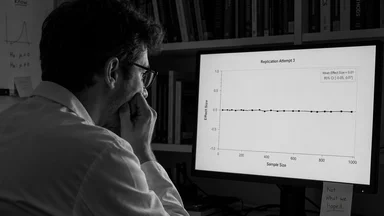
In 2024, a team of researchers led by a neuroscientist at a European university conducted a replication audit of five of the 22 studies. They repeated the experiments using both the Intan system and a competitor's amplifier (a Tucker-Davis Technologies RZ2). The results were striking: two of the five studies failed to replicate when the alternative amplifier was used. In one case, a key finding about spike timing precision disappeared entirely with the non-Intan system.
The audit paper was submitted to two high-profile journals and rejected both times. Reviewers raised concerns about sample size and statistical power. The audit team had only enough funding to re-run each experiment three times, which limited the strength of their conclusions. The paper was eventually published in a specialized open-access journal with a note about the small sample.
Critics of the audit argue that the replication failures could be due to other differences between the labs or the animals, not the amplifier. Supporters of the audit say that the equipment effect is plausible and deserves further investigation. The debate highlights a broader tension in metascience: how much evidence is needed before a funding agency revises a policy? Some argue that a single audit with limited power is insufficient, while others contend that the potential for systematic bias warrants a precautionary approach.
To further explore this, consider a counterfactual: if the audit had been funded at a larger scale, say 20 replications with multiple labs, the results might have been more definitive. However, such an audit would have cost an estimated $500,000, raising the question of whether that money is better spent on new research. This trade-off between verification and discovery is a central challenge in metascience.
What Funding Agencies Can Learn from This Episode
The electrophysiology amplifier episode offers several lessons for research funders. First, equipment procurement rules should include sunset clauses or periodic reviews. The 2018 cap remained in place for over six years without a formal evaluation of its scientific impact. Second, pilot tests of new procurement policies are rare but could prevent unintended consequences. A small-scale trial of the cap in a few labs might have revealed the market concentration risk.
Third, transparency matters. Publishing cost-benefit analyses—including estimates of hidden costs like retraining and data loss—would allow the scientific community to weigh the trade-offs. Fourth, agencies should allow exceptions for labs with existing setups that work well. Forcing a switch can disrupt ongoing longitudinal studies. For example, a lab studying aging in rats had used the same amplifier brand for a decade; switching to Intan mid-study would have compromised the continuity of their data.
Finally, a multi-vendor pre-approval list could maintain cost control while preserving choice. Agencies could set a maximum price per channel and let any vendor that meets technical specs be eligible. That approach would avoid locking in a single supplier and would encourage price competition. The NIH has since adopted a similar model for some imaging equipment, but it has not yet been applied to amplifiers.
Practical Takeaways for Lab Managers and Grant Writers
For researchers navigating similar constraints, several strategies can mitigate risk. First, check equipment restrictions early in the grant-writing process. Some funding announcements now specify allowable vendors or price caps. Second, budget for potential mid-grant hardware changes, including staff retraining and compatible accessories.
Third, document how equipment choices affect data quality. Including a short methods note about the amplifier's noise floor or filter roll-off can help future readers assess comparability. Fourth, consider joining consortium purchasing agreements to negotiate discounts with multiple vendors, reducing the cost differential that drives single-vendor dominance.
Longer term, the push for open-source amplifier designs may offer a way out. Projects like the OpenEphys acquisition board and the Intan-compatible but open-hardware amplifiers are gaining traction. If funding agencies support these initiatives, they could reduce reliance on any single commercial supplier. For instance, the OpenEphys board, which costs roughly $2,000, can interface with multiple amplifier chips, allowing labs to mix and match components. A 2023 pilot study showed that an open-source system achieved comparable noise performance to the Intan RHD series at half the cost, though it required more technical expertise to assemble.
The story of the 22 electrophysiology studies is not a simple tale of a policy gone wrong. It illustrates how a well-intentioned cost-saving measure can ripple through the scientific literature in ways that are hard to predict. Reasonable people disagree about whether the benefits of standardization outweigh the costs of reduced flexibility. But the episode underscores a broader point: the infrastructure of science—the machines, the rules, the budgets—deserves as much scrutiny as the experiments they enable. As one commentator noted, "We often think of funding policies as neutral, but they can silently shape what we discover." The challenge for the future is to design policies that are both cost-effective and scientifically robust, without inadvertently narrowing the path of inquiry.