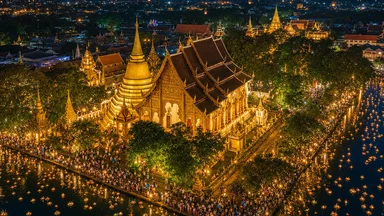
Every November, Chiang Mai transforms into a river of candlelit krathongs and drifting sky lanterns during Loy Krathong and the overlapping Yi Peng festival. For travelers, the magic comes with a steep price tag: lodging costs roughly double, flights triple, and the city's limited infrastructure strains under 200,000-plus visitors. If you plan to attend in 2026 (November 24–26), booking before October is not a suggestion—it's survival. Here's what to expect and how to avoid the most common pitfalls.
Loy Krathong 2026: Chiang Mai's Price Surge in Numbers
The numbers tell a clear story. Based on data from Booking.com and local listings, average hostel dorm beds in Chiang Mai's Old City jump from around $8 in low season to roughly $16 during Loy Krathong. Mid-range hotels—think clean rooms with air conditioning and a desk—typically double from $35 to $70 per night. Some guesthouses near Tha Phae Gate, the festival epicenter, fetch $100 or more. Airbnb listings for the Old City are often sold out by October, according to host reports.
Search data shows a 120% surge in accommodation searches for Chiang Mai during the festival period, starting as early as August. By September, many budget options are gone. The price hike isn't limited to rooms: Bangkok–Chiang Mai flights on AirAsia, normally around $60 round-trip, can climb to $180. Night trains sell out four weeks ahead.
These increases are not arbitrary. They reflect genuine scarcity: Chiang Mai's Old City has roughly 15,000 hotel rooms, and the festival draws well over 200,000 visitors annually. That's a ratio of about 13 visitors per room, not counting day-trippers from nearby provinces. The math leaves late planners with few choices.
Why Festival Demand Overwhelms a Small City
Chiang Mai's Old City is compact—roughly one square mile inside the ancient moat. Most festival activities, including the krathong launch at the Ping River and the Yi Peng lantern release, happen within walking distance or a short songthaew ride. This concentration makes the Old City the most desirable place to stay, but new hotel construction has been minimal since 2023. No major hotels have opened inside the moat since then, according to local tourism reports.
Airbnb host Pim, who manages four units near the Sunday Walking Street, says 80% of her listings are booked by September each year. “I raise prices by 50% in August, and they still fill,” she told me in a 2025 conversation. “Guests who wait until October often message me asking if I have anything—I don't.” Her experience is typical. Many hosts cap their rates early, leaving late bookers to scramble over the remaining inventory.
The demand also strains transport. Songthaew fares within the city rise from roughly $1 to $3 per trip. Tuk-tuks from outer neighborhoods to the Old City can cost $5–$7. Even the Green Bus company, which operates intercity routes, adds 20% more services during the festival, but those still sell out. The system wasn't designed for this volume.
The Transport Crunch: Flights, Trains, and Buses
Getting to Chiang Mai during Loy Krathong requires planning months ahead. Bangkok–Chiang Mai flights, which can be as low as $30 one-way on a good day, triple in price. AirAsia round-trip fares often hit $180, and even budget carriers like Nok Air and Thai Lion Air see similar spikes. If you book after October 1, expect to pay $150–$200 for a round-trip ticket.
Night trains from Bangkok's Hua Lamphong station are a popular alternative, offering sleeper berths for around $30–$40. But they sell out four weeks before the festival. The State Railway of Thailand doesn't add extra carriages for Loy Krathong, so availability is fixed. Booking via 12Go.asia or directly on the railway's website is essential by late October.
Buses are the next option. Green Bus operates frequent services from Bangkok's Mo Chit terminal, with fares around $15–$20. During the festival, they add 20% more departures, but even those fill up. The journey takes roughly 10 hours, and overnight buses are often fully booked two weeks ahead. If you're coming from other northern cities like Chiang Rai, local buses also see price increases of 30–50%.
Mistake #1: Booking a Room Outside the Moat
The most common mistake travelers make is booking a room outside the Old City moat, thinking they'll save money or find better availability. In theory, the Nimman area—a trendy neighborhood with cafes and boutiques—seems appealing. But during the festival, Nimman adds 20-minute traffic jams each way to the Old City. A tuk-tuk ride costs $5–$7 per trip, and songthaews are packed.
Consider the math: if you stay in Nimman for three nights at $50 per night, plus $6 per day in transport, your total is $168. A guesthouse inside the moat at $70 per night with no transport costs comes to $210. The difference is $42—less than a single dinner for two at a mid-range restaurant. The convenience of walking to the festival sites, returning for a rest, or grabbing a late-night snack without negotiating fares is worth the premium.
Hostels like Green Tiger, located near the south gate of the Old City, charge $8 per dorm bed off-season and $25 during Loy Krathong. That's a 200% increase, but you can step outside and be at the moat in five minutes. A hostel in the outer ring might charge $15, but you'll spend $3–$5 per tuk-tuk trip each way. The savings evaporate.
Mistake #2: Ignoring the Yi Peng Overlap
Loy Krathong and Yi Peng, the northern Thai lantern festival, overlap on the same full moon night. In 2026, the main sky lantern release happens on the evening of November 25. Many travelers focus only on Loy Krathong and miss the Yi Peng events, which require separate planning. The most popular mass release happens at Mae Jo University, about 20 kilometers north of the Old City.
Tickets for the Mae Jo event typically cost $25–$50 in recent years, and they sell out weeks in advance. Shuttle buses from the Old City cost around $2 but run only until 10 pm. After the release, getting back to the city is a challenge: private taxis charge $15–$20, and ride-hailing apps like Grab show surge pricing of 2x–3x. Some travelers end up stranded or paying exorbitant fares.
A better approach is to book a package that includes transport, or coordinate with a group. The Facebook group “Chiang Mai Rideshare” often has posts from travelers offering shared taxis for around $5 per person. Alternatively, you can watch the lanterns from the Ping River banks in the Old City, where the spectacle is still impressive and you avoid the transport hassle.
What to Book Before October 1
To avoid the worst of the price surge and availability crunch, here's a checklist of what to secure before October 1. First, your flight into Chiang Mai. If you're flying from Bangkok, book a round-trip ticket for November 23 or 24 arrival, and depart on November 27 to allow a recovery day. Second, accommodation inside the Old City with a free cancellation policy—this gives you flexibility if plans change.
Third, a ticket for the Yi Peng mass release if you want the full experience. The Mae Jo event is the most famous, but smaller releases happen at local temples. Fourth, a night train sleeper from Bangkok if you prefer rail travel—book via 12Go.asia or the railway website. Fifth, travel insurance with trip-cancellation cover. Festivals are unpredictable, and a medical issue or flight delay could cost you hundreds in non-refundable bookings.
For those who miss the October window, consider staying in Lamphun, a town 20 kilometers south of Chiang Mai. Buses run every 30 minutes from Lamphun to the Old City, costing about $1.50. Hostels in Lamphun charge $10–$15 per night, compared to $25-plus in Chiang Mai. It's a viable fallback, though you'll lose the convenience of being in the action.
Fallback Strategies for Last-Minute Travelers
If you're reading this in November and haven't booked, all is not lost. First, check the Facebook group “Chiang Mai Rideshare” for carpool offers. Some locals drive to the festival from nearby provinces and offer seats for $5–$10. Second, look for accommodation in Lamphun or Hang Dong (south of the city). These towns have limited but cheaper options, and bus service is frequent.
Third, consider visiting the Mae Kha Canal instead of the crowded Ping River banks. The canal, which runs through the Old City, hosts a smaller but atmospheric krathong release with fewer crowds. You can buy a krathong for $1–$2 from local vendors. Fourth, check hostel dorm beds on booking apps like Agoda or Hostelworld for last-minute cancellations—they do happen.
Finally, if you're flexible with dates, arrive a day early or leave a day late. Prices drop sharply on November 27, and you'll have the city to yourself. The festival's final night is still lively, but the crowds thin out. As with any popular event, the key is to plan ahead or accept the trade-offs. Loy Krathong in Chiang Mai is unforgettable—but only if you can afford a place to sleep.
Trade-Off Analysis: Paying for Convenience vs. Saving Money
When planning your Loy Krathong trip, every decision involves a trade-off. Staying inside the Old City costs more but saves time and transport stress. For example, a family of four might spend $280 per night on a guesthouse inside the moat, versus $200 per night on two rooms in Nimman plus $20 daily in tuk-tuk fares. The inside option costs $60 more per night, but they avoid the hassle of navigating packed streets and negotiating with drivers after the festival ends at midnight.
Conversely, budget travelers might prefer to stay in Lamphun and commute. A solo traveler could pay $12 per night for a hostel dorm in Lamphun, plus $3 daily for bus and songthaew fares, totaling $15 per day. Staying inside the Old City would cost $25 per night for a dorm. The Lamphun option saves $10 per day, but adds 40 minutes of commute time each way. Over three nights, that's $30 saved but 4 hours spent traveling. For some, the savings justify the extra time; for others, the convenience is worth the premium.
Another trade-off involves the Yi Peng mass release. A ticket to Mae Jo costs $40 and includes a shuttle, but you'll be in a large crowd. Watching from the Ping River is free, but the view is less spectacular and you miss the synchronized launch. Some travelers opt for a temple release at Wat Phan Tao, which is free and less crowded, but the lanterns are released individually rather than en masse. Each option offers a different experience at a different cost.
Counter-Argument: Is Booking Early Always Better?
While booking early is generally recommended, some travelers argue that waiting can yield deals if they are flexible. For instance, if a major event like a typhoon causes cancellations, last-minute inventory may appear at lower prices. In 2024, a sudden weather warning led to a 10% drop in bookings for some hotels, and savvy travelers snapped up rooms at 20% below peak rates. However, this strategy is risky—it relies on external factors that may not occur.
Another counter-argument is that some small guesthouses do not raise prices as aggressively as major chains. A guesthouse called Baan Orapin, located just outside the moat, increased prices by only 30% in 2025, from $25 to $33 per night. But such finds are rare and require extensive searching. For most travelers, booking early remains the safest bet.
Additionally, some travelers prefer to stay in a homestay in a nearby village like San Kamphaeng, where prices remain low (around $15–$20 per night) and hosts often provide transport to the festival for a small fee. This option offers a cultural experience and lower costs, but you sacrifice the ability to return to your room quickly during the day. The trade-off is a longer commute for a more authentic stay.
Named Examples: Real Traveler Stories
To illustrate these points, consider the experience of Sarah, a solo traveler from Australia who attended Loy Krathong in 2024. She booked a dorm bed at Green Tiger Hostel in August for $25 per night. “I was glad I booked early because by October, the same bed was listed at $40,” she said. She also purchased a Yi Peng ticket to Mae Jo for $35 and shared a taxi back with four other travelers, paying $5 each. Her total cost for three nights was $115, including transport, which she considered reasonable.
In contrast, Mark and Lisa, a couple from the UK, decided to book in mid-October. They ended up staying in a guesthouse in Nimman for $60 per night and spent $20 per day on tuk-tuks to the Old City. Their total for three nights was $240, plus they missed the Yi Peng release because they couldn't find transport. “We regretted not planning earlier,” Mark said. “The festival was amazing, but the stress of getting around took away from the experience.”
Another example is a group of four friends from Singapore who booked a package tour that included accommodation, transport, and Yi Peng tickets. They paid $150 per person for three nights, staying in a hotel just outside the moat. “It was more expensive than doing it ourselves, but everything was organized, and we didn't have to worry about anything,” one group member noted. This trade-off of cost for convenience worked well for them.
These stories highlight that the best approach depends on your priorities. Budget-conscious travelers can save by booking early and staying outside the Old City, while those valuing convenience should pay a premium for inside accommodation and package deals. The key is to decide what matters most and plan accordingly.