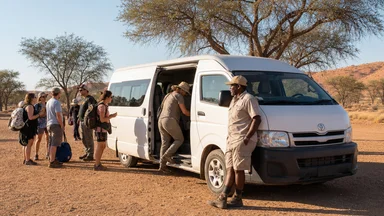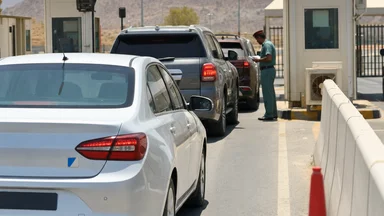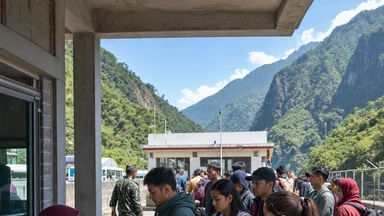
The Hatta border crossing between the UAE and Oman sees roughly 200 rental cars turned back each month. The reason is almost always the same: the vehicle was not pre-registered for cross-border travel. A valid rental contract and a clean driving record are not enough. The Oman border guard checks the rental agreement against a database of approved vehicles, and if the car is not listed, entry is denied. This happens even when the driver has all other paperwork in order, including a visa and insurance certificate. The rule applies to all rental companies, from major international chains to local agencies. Some drivers learn of the requirement only after queuing for an hour at the border. Others are told at the rental counter but assume the company has handled it. Neither assumption is safe.
Why a Rental Car Can Be Denied at Hatta
The Oman border guard at Hatta checks the rental agreement to confirm that the vehicle is authorized to leave the UAE. The rental company must have submitted the vehicle details to the Oman Ministry of Interior, which then issues a cross-border permit. Without this permit, the car is considered unregistered for international travel. The guard will ask for the original rental contract, not a photocopy or a digital version. The vehicle registration card must match the name of the person driving. If the renter is not the driver, the border guard typically requires a letter of authorization from the rental company. Some rental agencies in Dubai, such as Avis and Hertz, report that roughly 15 percent of their customers who attempt a cross-border trip fail because the vehicle was not pre-registered. The rejection rate is higher for cars rented from smaller agencies that may not have a streamlined process for obtaining the permit.
The Paperwork That Catches Most Drivers
The most commonly missing document is the cross-border permit itself. But even drivers who have it can be tripped up by other paperwork. The border guard expects to see the original rental contract, not a screenshot or an emailed copy. The vehicle registration card must be the original, not a laminated copy. The insurance certificate must specifically cover Oman; UAE-only insurance is rejected. Some drivers carry a certificate that says “comprehensive” but does not list Oman as a covered territory. The guard will also check for a stamp from the rental company on the contract. If the contract lacks a stamp, the guard may assume it is a counterfeit. A driver from Dubai, traveling to Muscat with his family, was turned back at Hatta because the rental company had not stamped the contract. He had paid for the cross-border permit, but the missing stamp was enough for the guard to deny entry. He had to drive back to Dubai, get the stamp, and return the next day.
How to Pre-Register a Rental Car
Pre-registering a rental car for Oman is a straightforward process, but it requires advance planning. At the time of booking, the driver should request a cross-border permit. The rental company will then submit the vehicle details to the Oman Royal Oman Police (ROP) through an online portal. The approval typically takes 24 to 48 hours, though some agencies report faster turnaround during weekdays. The driver should receive a permit number or a digital approval document. It is wise to keep a printed copy of this approval, as well as a digital backup on a phone. Some rental companies charge a fee for the permit, often in the range of 10 OMR (roughly US$26). This fee is separate from the standard rental cost. A few agencies include the permit in the rental price, but most do not. Drivers should confirm the fee and the timeline at the time of booking, not at the counter on the day of departure. Waiting until the last minute can result in the permit not being ready, leading to a rejection at the border.
Alternate Crossings and Their Own Rules
If the Hatta crossing rejects a car, the driver may consider an alternate border. The Khatmat Malaha crossing, located about 90 minutes north of Hatta, is sometimes described as less strict. However, it still requires the same paperwork: a cross-border permit, original rental contract, and insurance covering Oman. The difference is that the guards at Khatmat Malaha may be more accustomed to rental cars and may process the paperwork faster. The Al Ain crossing, also known as the Buraimi border, has a reputation for thorough checks. Guards there often inspect the vehicle registration and insurance in detail. The Wadi Jizzi crossing, further south, is used less frequently by tourists and may have fewer staff, leading to longer wait times. Bus passengers face fewer vehicle checks, but rental cars are still subject to the same permit requirement. Night crossings may have different staff who apply the rules inconsistently. Some drivers report being allowed through at night without a permit, but this is not reliable and could result in a fine if stopped inside Oman.
Real-World Scenarios: What Goes Wrong
A tourist from Dubai, planning a weekend in Muscat, arrived at Hatta with a rental car from a well-known agency. He had the contract, insurance, and a visa. The border guard checked the system and found no permit. The tourist called the rental company, but the office was closed. He was forced to return to Dubai, losing the day and the hotel deposit. Another couple, driving to the Wahiba Sands, had their car rejected because the rental company had submitted the permit for the wrong license plate. The guard noticed the discrepancy and denied entry. The couple abandoned the car at the border and took a taxi into Oman, then rented another car from a local agency. A third scenario involves a driver who entered Oman without a permit and was stopped at a police checkpoint inside the country. He was fined roughly 50 OMR and required to return to the UAE immediately. The fine was higher than the cost of the permit. A group of four travelers spent four hours at Hatta trying to resolve a missing stamp on the rental contract. The guard eventually allowed them through after the rental company faxed a letter of authorization, but the delay cost them their afternoon plans.
Costs of Ignoring the Rule
Ignoring the pre-registration requirement can be expensive. A rejection at Hatta means returning to the UAE, which can waste a full day of a trip. The driver still has to pay for the rental car for that day, and the rental company may charge a cancellation fee for the unused portion of the rental if the trip is cut short. If the driver decides to try an alternate crossing, the extra driving can add roughly 90 minutes to the journey, and that crossing may also reject the car. Some drivers choose to leave the rental car at the border and take a taxi into Oman, but then they must arrange for the car to be returned to the rental office, which can incur additional fees. If the car is left at the border overnight, storage fees may apply, and the rental company may charge a penalty for unauthorized drop-off. The total cost of a failed crossing can exceed the price of the permit many times over. A driver who attempted to cross without a permit and was fined inside Oman ended up paying more than 100 OMR in total, including the fine, a new rental, and lost hotel nights.
Packing a Backup Plan for the Border
Given the variability of border enforcement, a backup plan is essential. Before departure, the driver should carry printed copies of all documents: the rental contract, the cross-border permit approval, the insurance certificate, and the vehicle registration. The rental company's contact number should be saved on the phone, and it is wise to confirm that the company has a 24-hour helpline. The driver should also know the location of alternate crossings, such as Khatmat Malaha and Al Ain, and have a route planned in case Hatta is problematic. Checking Oman visa validity separately is important, as some drivers assume the visa is included with the car permit. Finally, allowing a two-hour buffer at the border can reduce stress if there are delays. Even with all paperwork in order, the guard may take time to verify the details. A calm attitude and a willingness to wait can make the difference between a successful crossing and a frustrating return. The rules at Oman's borders are not arbitrary, but they are applied unevenly. Preparation reduces the odds of being caught out.
Trade-Offs: Pre-Registration vs. Last-Minute Arrangements
Some drivers debate whether to pre-register or handle the permit at the border. Pre-registration offers certainty but requires advance planning and a fee. Last-minute arrangements, such as calling the rental company from the border, often fail because the company may not have staff available to process the permit quickly. A driver from Abu Dhabi, for example, arrived at Hatta without a permit and called his rental agency. The agency said they could submit the request, but it would take at least two hours, and the border guard was unwilling to wait. The driver had to turn back. On the other hand, pre-registering means committing to a specific travel date and vehicle. If plans change, the permit may need to be reissued, which can incur additional fees. A family from Sharjah pre-registered for a weekend trip but had to postpone due to illness. When they rebooked, the rental company charged a re-registration fee of 5 OMR. Weighing these trade-offs, most experienced travelers recommend pre-registration for peace of mind, especially during peak seasons when border queues are long.
Counter-Arguments: Why Some Drivers Succeed Without a Permit
Despite the strict rules, some drivers report crossing Hatta without a pre-registered rental car. These cases are rare and often involve specific circumstances. For instance, a driver with a rental car from a company that has a standing agreement with Oman authorities may be allowed through if the guard can verify the vehicle's status in real time. A few rental agencies in Dubai, such as Thrifty and Europcar, have automated systems that submit permit requests instantly. If the guard checks the database and sees a pending approval, he may allow entry. However, this is not guaranteed. Another scenario involves drivers who are traveling to Oman for a short visit, such as a day trip to the Hatta border area itself. The guard may wave them through if the destination is within a few kilometers of the border. But this exception is not written policy and depends on the guard's discretion. A driver from Dubai recounted being allowed into Oman for a day trip to the mountain villages near Hatta without a permit, but when he tried to re-enter later, the guard questioned why he had not been checked earlier. He was not penalized, but the experience was stressful. Relying on such exceptions is risky. The safer approach is to assume the rule applies to everyone.
Regional Variations: How Other GCC Borders Compare
The requirement for pre-registered rental cars is not unique to Oman. The UAE itself has similar rules for rental cars leaving the country. For example, rental cars from Dubai can cross into Abu Dhabi without special permits, but crossing into Oman requires additional paperwork. In Saudi Arabia, rental cars may cross into Bahrain via the King Fahd Causeway, but the rental company must provide a letter of authorization. In Qatar, rental cars can cross into Saudi Arabia via the Abu Samra border, but the process is similar: the rental company must register the vehicle in advance. Each country has its own database and approval process. The key difference with Oman is the strict enforcement at Hatta. Drivers who have experience crossing from the UAE into Oman via other borders, such as the Khatmat Malaha crossing, note that the guards there are more lenient about minor paperwork errors. For example, a driver with a missing stamp on the rental contract might be allowed through at Khatmat Malaha if he can provide a digital copy of the contract. At Hatta, the same error would likely result in rejection. Understanding these regional differences can help drivers choose the best crossing for their specific situation.
Practical Tips from Frequent Crossers
Experienced drivers who frequently cross the Oman border have developed strategies to minimize hassle. One common tip is to book rental cars from companies that specialize in cross-border travel. These agencies, such as Dollar and Budget, have dedicated departments for processing permits and can often provide same-day approval if the request is made before noon. Another tip is to request the permit at least 72 hours in advance, even if the rental company says 24 hours is enough. This buffer accounts for weekends and holidays when government offices may be closed. A driver from Fujairah learned this the hard way when he requested a permit on a Thursday evening and found the office closed until Sunday. He had to postpone his trip by two days. A third tip is to carry a spare set of documents in the glove compartment, separate from the originals. In the event of a lost wallet or bag, the spare copies can help at the border. Finally, some drivers recommend joining online forums or social media groups dedicated to UAE-Oman travel. These communities share real-time updates about border conditions, such as which crossings are busy and which guards are particularly strict. While not official, this information can help drivers prepare mentally for the process.
Conclusion: Preparation Is the Key to a Smooth Crossing
The Hatta border crossing is a gateway to Oman's natural beauty, from the mountains of Jebel Akhdar to the dunes of Wahiba Sands. But for rental car drivers, a smooth crossing depends on preparation. The rules are clear: the vehicle must be pre-registered, the paperwork must be complete, and the insurance must cover Oman. By planning ahead and understanding the potential pitfalls, drivers can avoid the frustration of a rejection. The extra effort of obtaining a permit and double-checking documents is a small price to pay for a hassle-free journey. Whether you are a first-time visitor or a seasoned traveler, treating the border crossing as part of the trip planning process will save time, money, and stress. Remember, the guard at Hatta is not trying to be difficult; he is enforcing a system designed to ensure that rental cars are properly tracked and insured. Cooperating with that system is the smartest way to get on the road to Oman.